The Peacoat and the Compact Language of Naval Clothing
B
BUYIT Journal· Fashion history notes
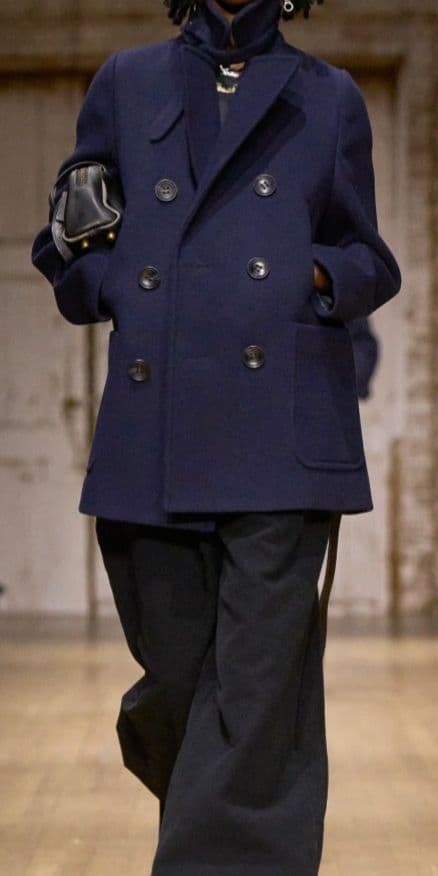
A peacoat is shorter than many coats, but it does not feel slight. Its strength comes from compression. Heavy wool, double-breasted front, broad lapels, vertical pockets, and a boxy body create a garment that protects without trailing behind the wearer. It is outerwear built for weather and movement, not for grand entrances.
The coat's association with naval dress gives its shape a practical logic. Sailors needed warmth, durability, and freedom to work. A long coat could be awkward on deck. A short, dense coat allowed the legs to move while the torso stayed protected. The double-breasted closure helped block wind. The collar could turn up. The wool held heat and resisted hard use.
Those functional details still shape how the peacoat reads in fashion. The front buttons create a strong vertical and diagonal structure. The collar frames the neck and face more boldly than many simple coats. The length often stops around the hip or upper thigh, making it work with trousers, jeans, and skirts without swallowing the lower body. A peacoat makes the wearer look ready for weather even on a clear day.
Unlike the trench, which can feel fluid and belted, the peacoat feels compact. It does not depend on a loose tie or drifting panels. It closes with weight. The body inside appears contained. That containment is part of its appeal. It offers a kind of everyday armor, especially in navy or black, without the aggression of leather or the formality of tailored overcoating.
The peacoat's military origins also give it a visual honesty. Many fashion coats borrow uniform details for decoration, but the peacoat's details are hard to separate from use. The broad collar is more than a style flourish. The heavy cloth is more than a luxury texture. The shorter length is a design proportion with a practical reason. The garment's identity comes from a set of practical answers that still make sense.
When adopted into civilian wardrobes, the peacoat kept authority but lost strict uniformity. On students, it could look practical and slightly romantic. On musicians, it could look spare and urban. On commuters, it became simply useful. Its neutrality made it a strong alternative to both formal wool coats and casual parkas.
Fit changes the mood sharply. A trim peacoat looks almost tailored, especially over a knit or shirt. An oversized one becomes more relaxed and contemporary, with the shoulders dropping and the wool creating volume. A cropped peacoat emphasizes the waist and legs. A longer version moves closer to a reefer or general double-breasted coat. The classic version works because it balances width and length without needing much styling.
The buttons matter. Traditional anchor buttons or dark heavy buttons keep the naval reference visible. Bright metal changes the coat's formality. Hidden or minimal buttons reduce the historical signal. Pockets matter too: slash pockets invite hands, which changes posture and makes the coat feel lived in rather than ceremonial.
The peacoat is also a lesson in how color can hold history. Navy is not just a flattering dark shade here. It points back to maritime uniform and practical visibility of dirt and wear. Black makes the coat more urban and severe. Camel softens it but moves it away from its original code. Each color edits the past differently.
Modern fashion keeps the peacoat alive because it solves the problem of smart cold-weather dressing without looking overdesigned. It can sit over a hoodie, a rollneck, a white shirt, or a dress. It works with sneakers, boots, loafers, and heavy soles. It gives enough structure to casual clothes and enough ease to formal ones.
What makes the peacoat satisfying is its refusal to become delicate. It is not trying to be graceful in the way a wrap coat is graceful. It is not trying to lengthen the body like a long tailored coat. It does something more direct: it holds the upper body, keeps warmth close, and gives the outfit a firm edge.
That firmness is why the coat remains modern. In a wardrobe full of soft layers, stretch fabrics, and technical shells, the peacoat offers dense clarity. It reminds us that usefulness can have a shape, and that a garment designed for wind can still make sense far from the sea.
Compared with many military-derived garments, the peacoat has avoided becoming pure costume because its use remains obvious. Cold weather still requires dense cloth and easy closure. The coat's history is present, but it does not need reenactment. A modern peacoat can be stripped of insignia and still make sense.
Its shorter length also gives it a particular relationship with the city. It works on stairs, in cars, on public transport, and in crowded spaces. A long coat can feel elegant but cumbersome. The peacoat keeps the upper body warm while letting the lower body move. That practical compromise is part of its enduring shape.
The best versions depend on cloth. Thin fabric makes the coat look like an imitation of itself. Dense wool gives the collar weight, lets the front sit properly, and allows the shoulders to hold. The peacoat is not a coat that can fake substance.
Related articles
June 16, 2026
June 6, 2026
June 5, 2026
June 2, 2026