The Leather Jacket and the Surface of Rebellion
B
BUYIT Journal· Fashion history notes
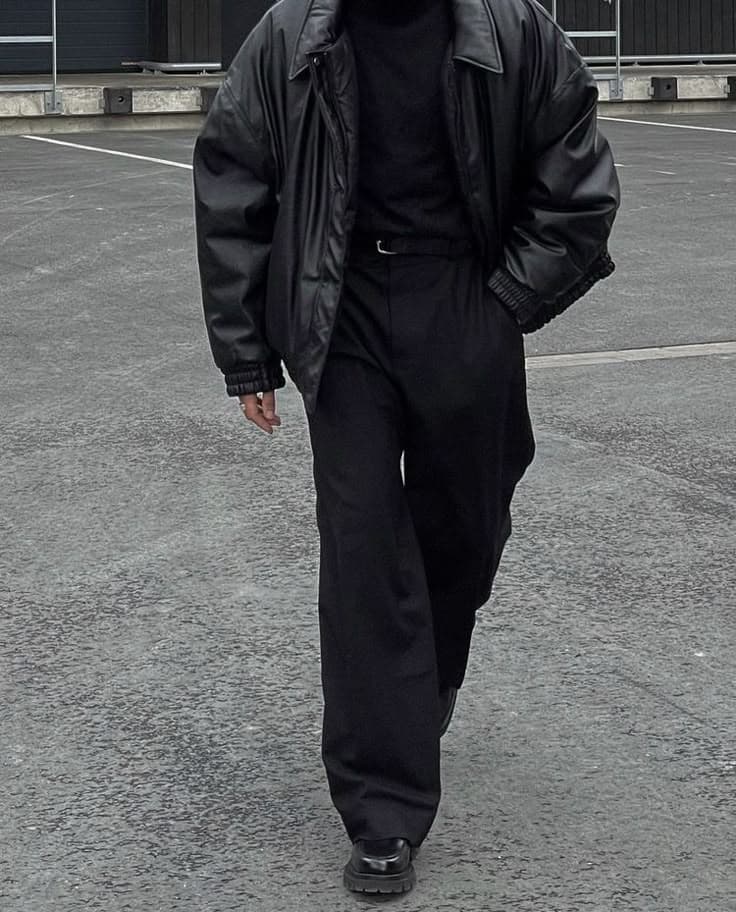
A leather jacket announces itself through surface before silhouette. Light catches the grain. Creases form at the elbow. The shoulders hold shape. A zipper cuts across the front or runs straight down the body. The garment looks protective even when it is worn for style rather than safety.
Leather has long been used for durability and protection, but the modern fashion power of the leather jacket comes from specific twentieth-century associations: aviation, motorcycles, military clothing, film, music, and youth rebellion. The jacket became a way to wear danger after danger had been stylized.
The motorcycle jacket is especially important. Its asymmetrical zip, snaps, belt, and heavy hide were practical for riding, but they also created a strong visual language. The body looked armored and slightly off-center. The diagonal closure broke the torso into movement. The hardware made fastening visible. Even standing still, the jacket looked ready for speed.
Cinema turned that readiness into attitude. Leather jackets worn by film stars helped attach the garment to defiance, masculinity, sexuality, and youth. Later music scenes reshaped it again: punk, rock, metal, and various subcultures used leather as both protection and signal. A leather jacket could say that the wearer belonged somewhere outside ordinary politeness.
The material is central to that reading. Wool can be warm, cotton can be plain, nylon can be technical, but leather keeps a memory of skin. It is animal surface transformed into clothing. That gives it weight, smell, grain, and ethical complexity. It ages visibly, sometimes beautifully. Scuffs and creases may make it more desirable rather than less.
Different leather jackets tell different stories. A bomber-style leather jacket carries aviation and sport codes. A cafe racer is cleaner and more minimal. A biker jacket is more confrontational. A blazer in leather turns tailoring into something harder. Cropped leather changes proportion; oversized leather creates volume and slouch. Black is classic, but brown, oxblood, cream, and colored leather shift the mood.
Fit matters because leather does not behave like cloth. It resists before it yields. A new jacket may feel stiff, while an old one may shape itself to the wearer. The shoulder, sleeve, and armhole need precision because leather cannot simply drape away mistakes. A good jacket becomes personal through wear.
The leather jacket's rebellion is now complicated by repetition. Once a symbol becomes classic, it loses some danger and gains reliability. A black leather jacket can be bought anywhere, worn by anyone, and styled safely. But the old charge does not disappear completely. It remains in the surface, the zip, the weight, the way the jacket changes posture.
In womenswear, leather jackets have often worked as a counterweight. Over a dress, they reduce sweetness. With a skirt, they add edge. With denim, they double down on casual history. With tailoring, they disrupt the office code. The jacket brings a protective layer that can make softer garments feel more deliberate.
The ethical conversation around leather is now unavoidable. Real leather, vintage leather, vegan alternatives, coated textiles, and plant-based experiments all change the meaning of the garment. A leather jacket's old promise of durability may support keeping and repairing one object for years, while new production raises questions about materials and impact. The look remains powerful, but the choices around it have become more visible.
What makes the leather jacket endure is that it turns protection into personality. It gives the upper body a shell. It changes how the wearer stands, often making the shoulders feel broader and the torso more guarded. It can be stylish, but it still feels like a garment that expects contact with the world.
The strongest leather jackets do not look rebellious because they are decorated with rebellion. They look that way because the material has consequence. It creases, weighs, warms, marks, and lasts. It asks the wearer to occupy a slightly harder outline.
Leather also has a strong relationship with repair. Scratches can be conditioned, linings replaced, zippers repaired, seams restitched. This repairability supports the idea that the jacket is a long-term object rather than a seasonal layer. Good examples often look as if they have survived more than one version of the wearer.
Hardware changes the jacket's tone. Silver zippers and snaps feel colder and more industrial. Brass warms the surface. Minimal hardware makes leather more refined, while heavy hardware pushes the garment toward biker or punk codes. The placement of a zipper can make the torso look straight, diagonal, narrow, or armored.
Because leather is expensive visually as well as materially, it can dominate an outfit quickly. A small leather jacket over a plain dress may be enough. Leather trousers plus leather jacket become a full statement. The garment asks for balance, not because it is difficult, but because its surface has volume even when the cut is simple.
Related articles
June 17, 2026
June 15, 2026
June 1, 2026
May 29, 2026