Ballet Flats and the Art of Staying Close to the Ground
B
BUYIT Journal· Fashion history notes
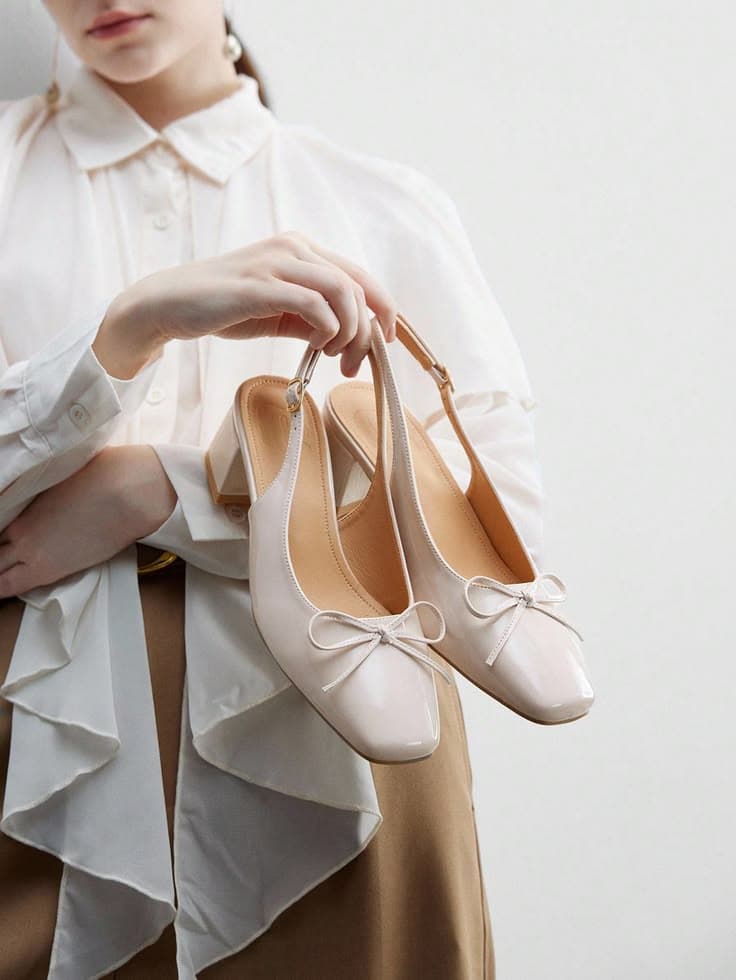
A ballet flat is a shoe that looks as if it has almost nothing to prove. It stays low. It does not lift the body into drama. It does not announce itself with a heavy sole or a sharp heel. Its shape is modest: rounded toe, soft upper, thin edge around the foot, sometimes a small bow that seems decorative until you remember the shoe's relationship to dance.
The ballet flat's fashion life depends on that nearness to the floor. It borrows the idea of movement from the dance studio but removes the performance. A true ballet slipper is a tool, shaped for training and stage work. The fashion ballet flat keeps the suggestion of discipline while becoming a city shoe: something for walking, waiting, commuting, crossing a room, slipping on without ceremony.
Its history in modern fashion is often tied to mid-twentieth-century style, including the appeal of dancers, actresses, and women whose elegance looked lighter than formal dressing. Repetto, founded by Rose Repetto in Paris, is central to the story because of its connection to ballet shoes and later to everyday flats. The shoe carried an unusual mix of associations: youth, delicacy, practicality, French ease, and the kind of polish that does not require height.
What makes the ballet flat visually distinct is not simply that it is flat. Many shoes are flat. A loafer is flat, but it has a tongue, seam, vamp, and often a harder line. A sneaker is flat, but it has volume and sport structure. A ballet flat exposes the top of the foot and makes the ankle visible. It frames the foot rather than building around it.
That exposure changes the body line. With trousers, the flat can make the hem feel lighter. With a skirt, it extends the leg without the obvious architecture of a heel. With jeans, it softens denim. With tailoring, it lowers the temperature. It can make an outfit feel less like a presentation and more like someone moving through a real day.
The shoe is not without tension. Its delicacy can be deceptive. A thin sole may not offer much support. A soft upper can lose shape. The very lightness that makes it elegant can also make it impractical for weather, long walks, or rough pavement. That is part of the ballet flat's charm and limitation. It is a practical shoe in the sense that it is easy, but not always practical in the sense of durable comfort.
Fashion keeps returning to ballet flats because they change mood quickly. A black pair can be severe and almost school-uniform plain. A satin or pale pink pair keeps the dance reference close. A square-toe version modernizes the outline. A Mary Jane strap adds innocence or structure depending on styling. A red pair turns the small shoe into a punctuation mark.
The bow is worth noticing. On many flats, it is tiny, sometimes almost apologetic. It can make the shoe seem sweet, but it also points back to the way dance shoes are secured and adjusted. Fashion often keeps such details after their original purpose fades. The result is a trace of function turned into memory.
The ballet flat also carries ideas about femininity that shift with time. It can look girlish, but it can also look adult and spare. It can suggest vulnerability, but paired with sharp clothing it becomes a refusal of expected glamour. The absence of a heel matters. It changes how the wearer stands. The body is not pitched forward. The stride is smaller or quicker depending on the sole, but the posture is not dictated by height.
That is why ballet flats are useful for understanding modern elegance. They show that ease can be specific. A shoe does not need to lift, armor, or exaggerate the body to change an outfit. Sometimes it changes the outfit by removing tension. It brings the eye down to the ground, to the ankle, to the quiet line between clothing and movement.
The ballet flat survives because it keeps a trace of training inside a casual object. It suggests practice without effort, grace without stage lighting, and femininity without the machinery of a heel. When it works, the shoe does not make the wearer look like a dancer. It makes walking look slightly more considered.
The ballet flat also exposes how fashion borrows from disciplined bodies. Ballet carries ideas of training, control, lightness, and pain, but the street shoe keeps only a softened version of that world. It lets the wearer borrow grace without the labor behind it. That borrowing can be charming, but it is worth noticing.
The shoe's smallness affects styling. It rarely overpowers trousers or dresses, so it can make an outfit feel more personal than designed. A flat under cropped trousers reveals the ankle; under a full skirt it keeps the silhouette from becoming too formal. With socks, it changes again, moving toward school, rehearsal, or deliberate awkwardness.
Because ballet flats have little visual weight, they ask the rest of the outfit for balance. A large coat, wide trouser, or oversized knit can make them look fragile. That contrast is often the point. The shoe stays close to the ground while the clothing around it expands.
Related articles
June 13, 2026
June 10, 2026
June 7, 2026